Why chair yoga is for everyone!
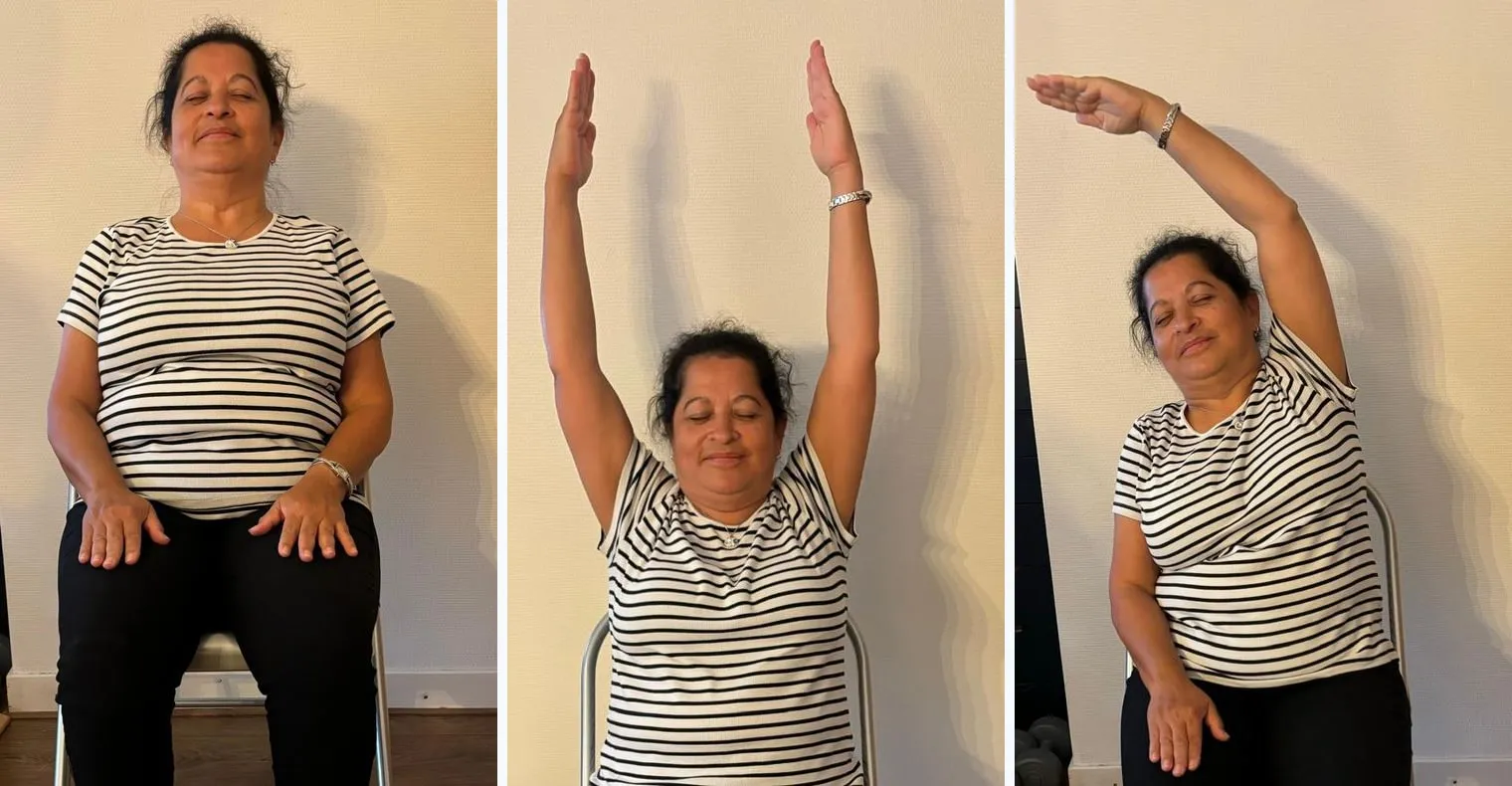
If you spend long hours sitting, juggle work and family, or simply want a gentler way to move, chair yoga is one of the most accessible, evidence-based tools you can add to your routine. Research shows improvements in strength, flexibility, balance, pain and stress across a wide range of adults, not just seniors or people with disabilities.
What is chair yoga?
Chair yoga is simply yoga adapted so that you’re seated or using a chair for support, rather than getting up and down from the floor. You still work with key yoga ingredients, such as joint-friendly strength, stretching, breathwork, relaxation and mindfulness, but from a stable base that feels more doable in an office, living room or classroom.
Busting the myth: “chair yoga is only for older people”
It’s true that many studies have focused on older adults or people with health conditions, because they’re the ones most likely to struggle with traditional standing/mat-based classes – but the mechanisms that make chair yoga effective don’t depend on your age. When you practise chair yoga you’re loading muscles, moving joints through range, regulating your breath and calming your nervous system, and research shows these processes benefit younger and middle-aged adults, much as they help older populations.
Chairs are also used as props in Restorative Yoga, Iyengar Yoga, and Prenatal Yoga. However, I wish they were more widely available in general classes as well. Beginners, and interestingly, muscular athletes, of all ages sometimes find it difficult to practise on the mat, particularly in seated poses. Instead of being able to relax and breathe, many people suffer for the duration of the class! Learning the basics on the chair would benefit all these people.
Chair yoga can also be a more advanced practice. When there is less emphasis on difficult postures and dynamic, fast-paced flows, one can really start paying attention to the more subtle parts of the practice.
Put simply: if you have a body and a chair, chair yoga is for you.
The Evidence
One of the clearest use cases for chair yoga is pain, especially in areas like the knees, hips and lower back that often protest after years of standing, walking or desk work. Trials in older adults with lower-extremity osteoarthritis show that chair-yoga programs are safe and can reduce how much pain interferes with daily activities, even when participants cannot tolerate standing exercise. These findings suggest that chair yoga can help you move more freely and feel less limited by pain, even when pain doesn’t disappear overnight.
In a small office-based study, just 15 minutes of chair-based yoga postures or guided meditation during the workday significantly reduced perceived stress compared with continuing regular office work, and produced physiological signs of relaxation such as reduced breathing rate and favourable changes in heart-rate variability. So even a short “reset” at your desk can measurably shift your stress levels and nervous-system state.
Seated exercise isn’t only about the body. A systematic review and meta-analysis of seated exercise trials in older adults (including chair-based programs) found a large positive effect on cognition compared with usual care or social activities, as well as smaller benefits for strength, spinal flexion, depression and quality of life. Qualitative work embedded in the Gentle Years Yoga chair-based program shows that many participants describe meaningful improvements in biopsychosocial health and value the sessions highly, even when group-level quality-of-life scores don’t show dramatic change.
Studies in older adults with multimorbidity (multiple long-term conditions), people with osteoarthritis and psychiatric inpatients all report that chair-based programs are safe, feasible and generally well accepted. The largest randomized controlled trial of chair-based yoga to date (Gentle Years Yoga) found no significant changes in quality-of-life scores compared with usual care, but confirmed that the program was safe, valued by many participants and likely cost-effective for this complex population.
Chair Yoga with Me
I appear able-bodied, but my body has been through a lot; ankle injuries, wrist injuries, knee injuries, herniated discs, chronic neuropathic pain… It has been challenging to find in-person yoga classes which wouldn’t aggravate my injuries. I have been further injured in teacher trainings and yoga retreats. As such, I have had to be very discerning with the type of yoga classes I go to. I have had to learn about my boundaries and limitations. Chair yoga has become a wonderful anchor, something I can practise safely while injured, recovering, or when I am fit and healthy.
One of the strengths of chair yoga is how easily it can be adapted. One can adapt the pace and intensity: using the chair purely for balance while you stand, staying fully seated if you’re recovering from injury or surgery, or choosing variations that respect pregnancy, larger bodies or neurodivergent sensory needs. Chair yoga isn’t a consolation prize; it’s a fully-fledged practice designed around real-world bodies and lives.
Chair yoga gives you a practical way to interrupt prolonged sitting with joint-friendly movement and focused breathing, without needing a mat or a change of clothes. No fancy equipment needed!
I am a trained Chair Yoga teacher, and I can tailor a programme just for you. I can support you either online and/or in-person (if you live in The Hague). All you need is a sturdy chair with no armrests. I can teach you how to incorporate seated movement and breath into your routine, so that you can benefit from clearer thinking, a better mood and a greater sense of agency over your health.
Proud to be an Accessible Yoga Ambassador!
I was trained in Chair Yoga by the Accessible Yoga School, and I have since joined the Accessible Yoga Ambassador & Mentorship Program. I am so grateful to be part of such a revolutionary community, and to be mentored by experts and accessible yoga pioneers from all over the world.
I aim for my yoga teaching to be aligned with the mission of Accessible Yoga: an inclusive and equitable practice that is safe and effective for every body, respectful of the South Asian roots of yoga, and celebrating unity in diversity.
Where to go from here. If you’d like to read the peer-reviewed research behind chair yoga, each study is summarised – with a link to the original paper – in the Accessible yoga section of my Evidence page. To practise with guidance, you’re welcome to explore the studio classes or individual sessions, or simply get in touch with a question.